Daylor Williams

AI Product Builder + ML Researcher

I study how vision models represent information and build AI products around problems I want to solve.

About

01 · In brief

I study Cognitive Science because I want to understand what a model has actually learned, not just what it outputs. I'm interested in the space between capability and use: how representations form, how intelligent systems fail, and what it takes to make them useful in the real world.

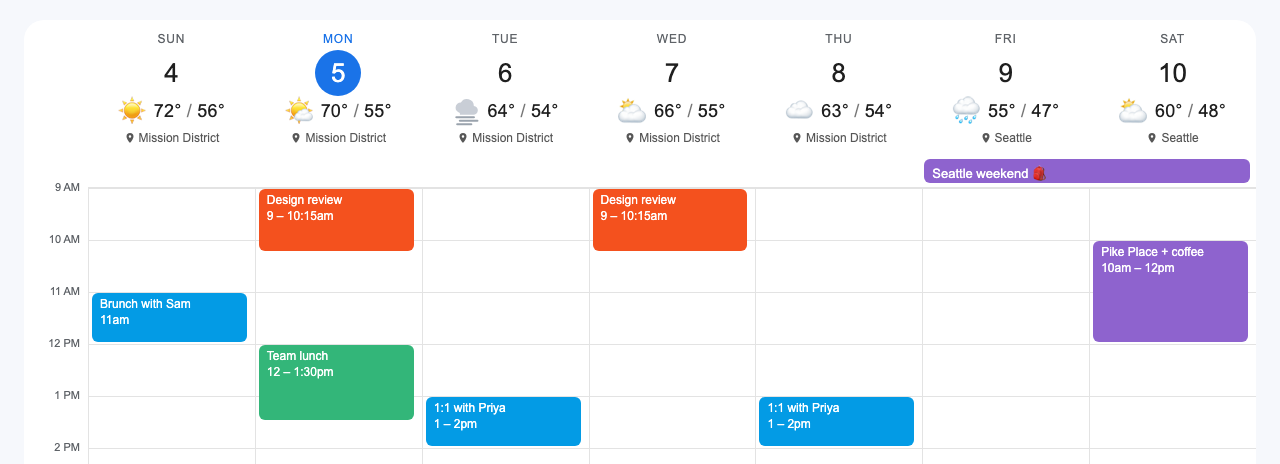
In my free time, I like shipping fun projects. This fall, I put FLAGGED, a daily flag game, on the App Store and Calendar Weather on the Chrome Web Store. At the Hack-Nation Global AI Hackathon, I built Falsify solo in 24 hours, an autonomous lab for running controlled experiments on AI agents.

Alongside that, I work on two longer-term projects at UCLA. In the Computational Vision Lab, I'm decomposing DINOv3 representations to test whether spatial relationships are encoded independently from object identity. At UCLA's Technology Development Group, I'm building the evaluation framework for an AI patent-search agent. I designed its golden datasets, defined failure cases, and use them to determine where the system is reliable, where it breaks, and where human review still needs to stay in the loop.

Most of what I work on comes back to the same question: what is an AI system actually doing, and how do we turn that understanding into something worth using?

Selected Work

02 · Eight projects

01

Falsify

Hackathon · live

7th Hack-Nation Global AI Hackathon · Solo build · 24 hours · October 2026

Agent evals mostly ask whether an agent succeeded. The harder question is why it behaved that way, and what intervention would change it.

Owned

  • Solo build: lab design, experiments, site, in 24 hours
  • Autonomous lab of AI agents: PI, pods, analyst, skeptic, reviewer
  • Pre-registered hypotheses and a synthetic test environment
  • Statistical analysis with confidence intervals on every claim
  • React/TypeScript results site, deployed on Vercel

Result

Ran four research loops on Claude Haiku and Qwen agents studying when they resist correction. Most hypotheses came back null, and the lab said so: 0/90 agents persisted with an invalidated plan. Its first real effect: an advisory majority saying "skip it" cut verification by 30 points. Result-to-decision time fell from 60 minutes in the first loop to 6–11 minutes in later loops.

  • Python
  • Claude API
  • Omnigent
  • Agent evals
  • React
  • Statistics

Live site → View source on GitHub →

02

AgentTrace

Independent project · AI agent debugging tool · 2026

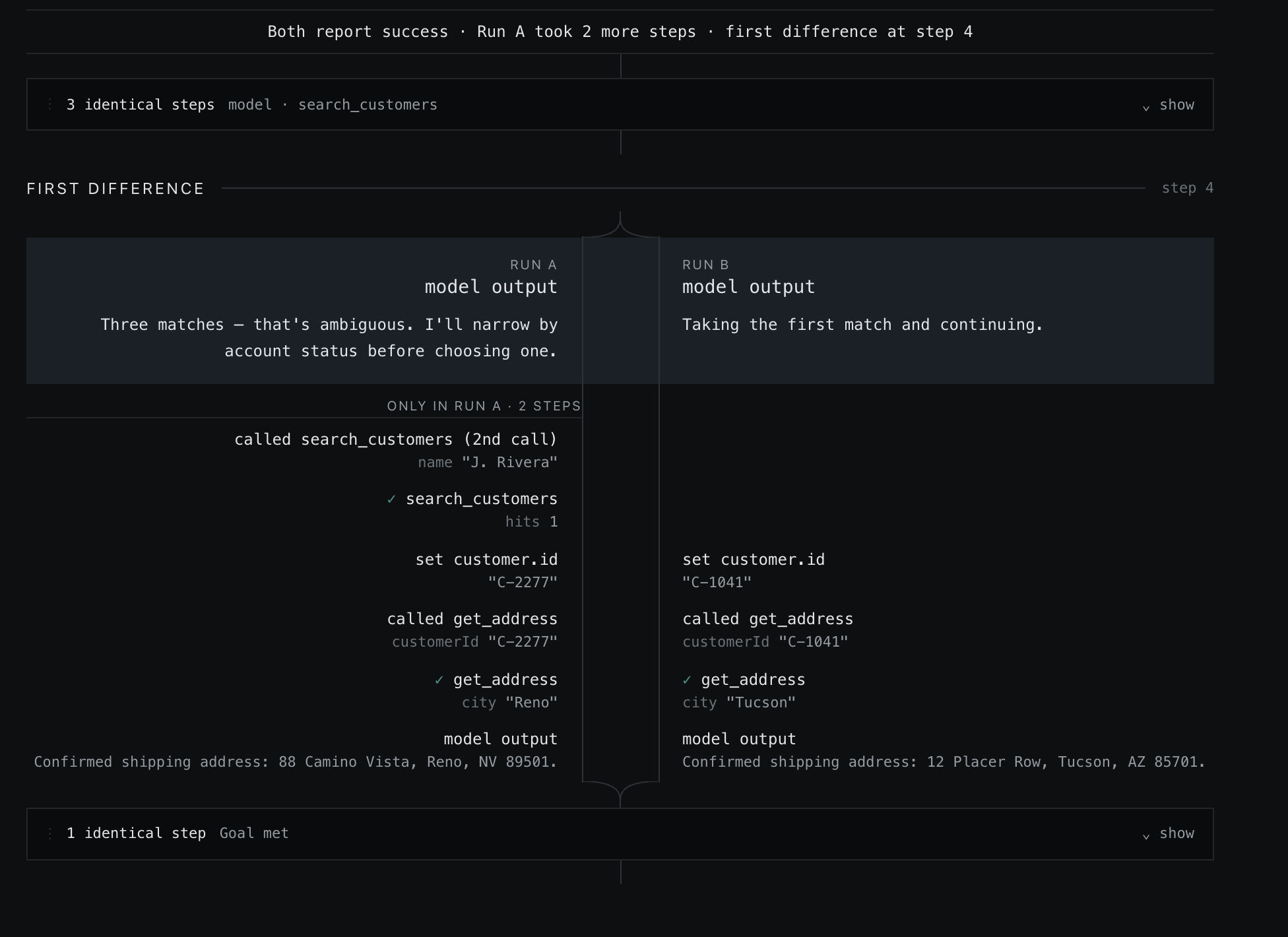
Two runs of the same agent can behave differently when the task barely changes. Raw traces make the useful difference hard to find.

Owned

  • Trace schema and comparison model
  • Deterministic alignment (weighted Needleman-Wunsch)
  • Field-level behavioral diffs
  • React/TypeScript trajectory interface
  • Claude Code transcript adapter

Result

Aligns two runs, collapses identical behavior, and shows the first observable difference in tool calls, arguments, results, errors, retries, and stopping. Validated on real Claude Code sessions without requiring manual comparison of raw transcripts.

  • React
  • TypeScript
  • Needleman-Wunsch
  • Claude Code
  • Agent evals

Full write-up → View source on GitHub →

03

DINOv3 Representation Research

Computational Vision & Learning Lab, UCLA · First author · manuscript in preparation for ICML

Vision models encode what objects are and how they relate in the same embedding, and the two can't be inspected separately.

Owned

  • First-author study: design, experiments, writing
  • Embedding-space analysis of DINOv3 features
  • Causal-intervention experiment design (in progress)

Result

Removing the object subspace from a frozen embedding leaves a residual that still carries spatial relation: 93.3% cross-object generalization against 53.3% from raw embeddings, and the signal transfers to 400 photographed real-world objects at 97.9%. Currently testing whether interventions on the relational component produce the predicted changes in spatial judgments.

  • PCA
  • LDA
  • Linear projections
  • Causal interventions (in progress)

Full write-up →

04

Agentic Prior-Art Platform

UCLA Technology Development Group · AI Product Intern · 2026

Every invention disclosure needs a prior-art search across global patent literature. It is slow, manual work, and it gates licensing decisions.

Owned

  • Customer discovery with licensing officers
  • Product requirements for the agent system
  • Golden evaluation datasets for grading agent output
  • Agent failure analysis and taxonomy

Result

Co-building an agentic prior-art system, graded against golden datasets built from real disclosures across sparse, crowded, and inconclusive technology fields. The cases it gets wrong help define what should remain with a human reviewer.

  • Python
  • APIs
  • Azure
  • EPO infrastructure
  • Agent evals

05

FLAGGED: Daily Flag Game

App Store

Independent project · iOS daily game · 2026

I built FLAGGED because I wanted a simple daily flag game I'd actually want to play.

The idea is straightforward: 10 flags a day, the same set for everyone. The harder part was making that work without a backend and making typed answers feel fair. The app generates each day's set on-device, handles aliases and small typos, and avoids accepting an answer when that typo could point to a different country.

I also spent a weird amount of time thinking about difficulty. Easy mode uses flags people are actually likely to confuse rather than random countries, and Hard mode lets you type the answer from scratch.

I designed, built, and shipped the whole thing myself in React Native, Expo, and TypeScript. It went live on the App Store in September 2026.

  • React Native
  • Expo
  • TypeScript
  • Expo Router

View on the App Store →

06

Calendar Weather

Chrome Web Store

Independent project · Chrome extension · 2026

Google Calendar shows where you will be each day but not what the weather will be there, least of all when a trip takes you somewhere else.

Owned

  • Sole author: design, build, store release
  • Manifest V3 extension that renders inside Google Calendar
  • Trip detection from all-day events and their locations
  • NOAA forecast blend for US locations, with caching
  • Privacy-first: no servers, accounts, or analytics

Result

Each day's forecast appears under its date in Calendar and switches to the destination city when you travel. US forecasts use NOAA's blend because the default model ran about 10°F hot for coastal LA. It's built without innerHTML to satisfy Calendar's Trusted Types policy, and it reads no calendar data through Google's API.

  • JavaScript
  • Chrome MV3
  • Open-Meteo
  • MutationObserver

Add to Chrome → Product page →

07

AI Workpaper Conversion

PwC · Workflow design · 2026

Converting audit workpapers between formats consumes hundreds of billable hours per engagement, all of it manual.

Owned

  • Designed the conversion workflow and its review steps
  • Accuracy checks against the source workpaper
  • Human-review controls at each step

Result

Modeled ≈480 hours and ≈$150K in savings per engagement; earned engagement-partner sponsorship for rollout planning.

  • Workflow design
  • QA controls
  • Human-in-the-loop review

08

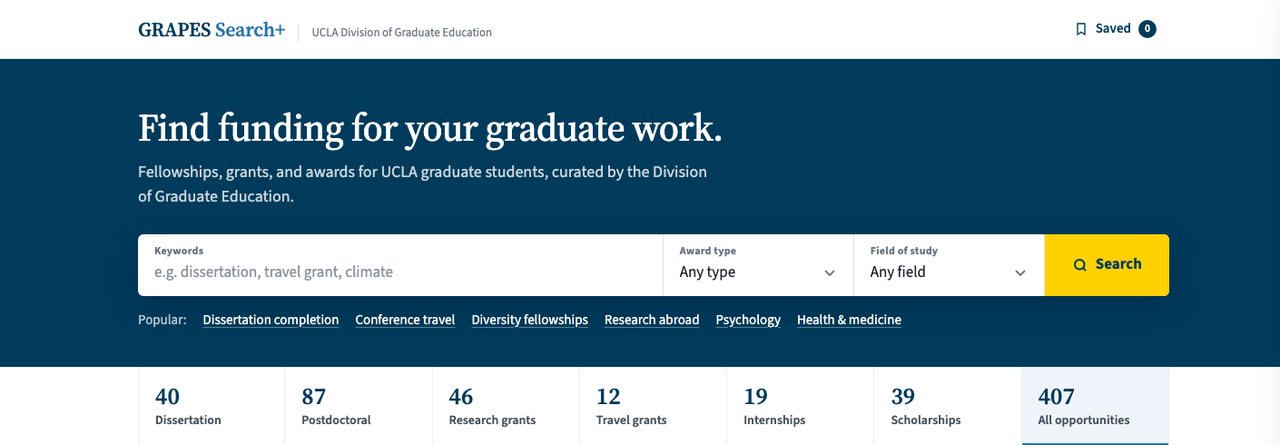
GRAPES Search+

Built for UCLA Division of Graduate Education · Independent project · live · ongoing

UCLA's graduate funding list is a spreadsheet that goes stale quietly: deadlines pass, links die, and students can't tell which listings are still real.

Owned

  • Sole author: product, design, data pipeline
  • September 2026 redesign of the search experience
  • Audit of every listing against its source
  • Python pipeline with scheduled GitHub Actions updates
  • Verified / unverified labels on every listing
  • Working with Graduate Division leadership on adoption

Result

Rebuilt as a search-first funding finder: plain-language search with related terms, filters by deadline, award type, field and season with live counts, saved awards, and shareable search links. Passed deadlines roll forward to the expected next cycle instead of disappearing. The redesign audit removed 22 dead listings, updated 116 deadlines, replaced 25 broken links and added 88 missing awards, bringing it to 400+ live opportunities. Now working with Graduate Division leadership on bringing it into official use.

  • HTML/CSS/JS
  • Python
  • pandas
  • GitHub Actions
  • Data auditing

Live site → View source on GitHub →

Research

03 · Representation decomposition

I decompose DINOv3's internal representations into object identity and spatial relation. On 400 real-world objects, spatial relation is classified at 97.9% mean accuracy on held-out objects. I'm now testing whether intervening on the relational component changes the model's spatial judgments as predicted.

Full write-up →